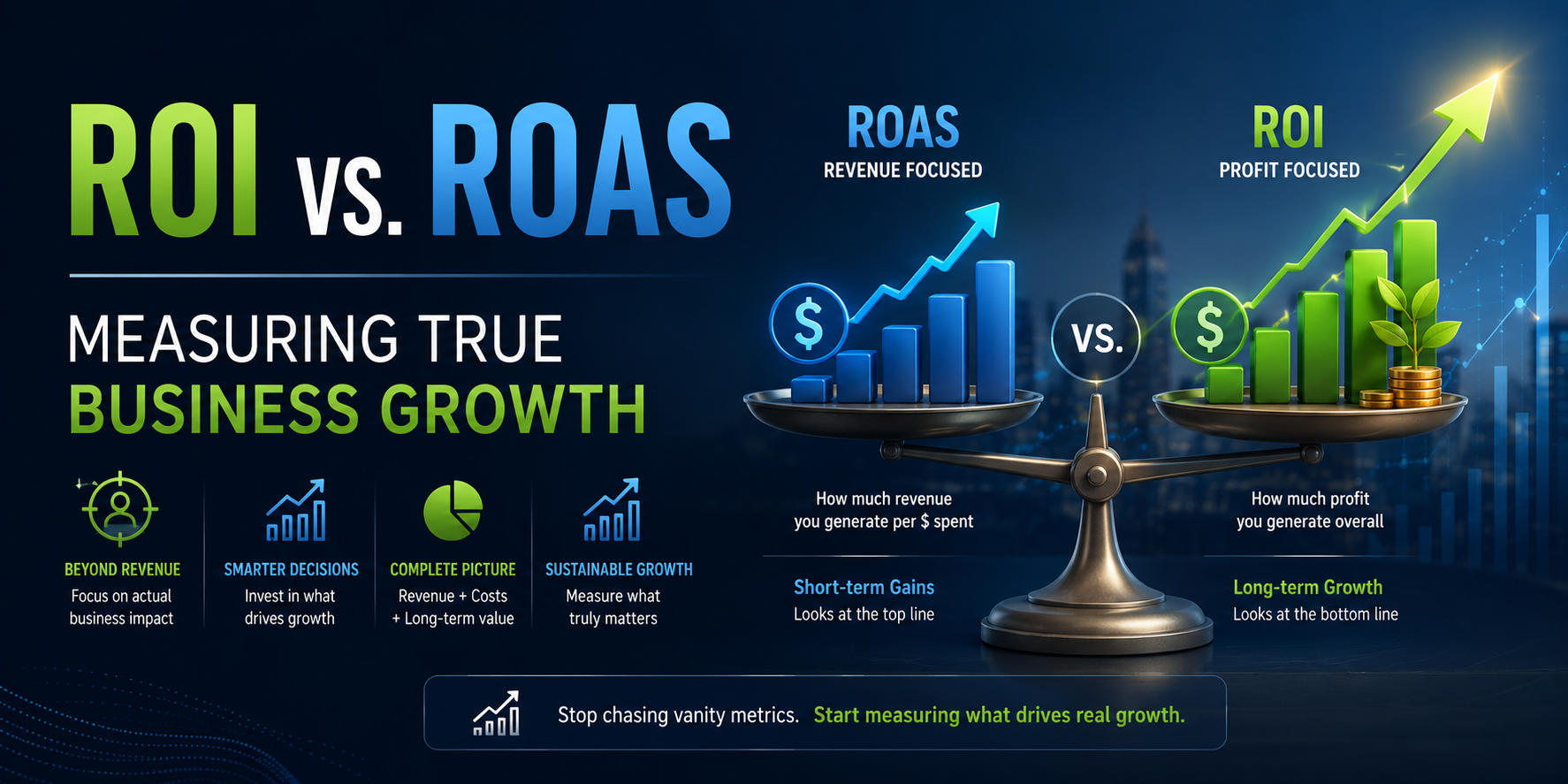
In the world of digital advertising, metrics can often be misleading. Most brand owners focus heavily on Return on Ad Spend (ROAS). However, if you want to scale sustainably, you must prioritize your Digital Marketing Performance ROI. Understanding the difference between a vanity metric and a profitability metric is the first step toward a successful long-term strategy.
Why ROAS Isn’t the Full Story
While ROAS tells you how much revenue you earned for every dollar spent on ads, it ignores the cost of goods sold (COGS), shipping, and operational overhead. A high ROAS might look great on a dashboard, but your Digital Marketing Performance ROI could still be negative if your margins are thin.
Moving Toward Profitability
To calculate your true Digital Marketing Performance ROI, you need to look at the “Bottom Line.” This involves:
-
Tracking Lifetime Value (LTV): A customer acquired today might yield a higher Digital Marketing Performance ROI over six months.
-
Factoring in Agency Fees: Your Digital Marketing Performance ROI should include all management and tool costs.
-
Attribution Modeling: Understanding which touchpoints actually contribute to the Digital Marketing Performance ROI.
Focusing solely on platform data can lead to poor decision-making. By analyzing your Digital Marketing Performance ROI, you can identify which products are actually making you money. Every marketing dollar should be treated as an investment; therefore, the Digital Marketing Performance ROI is the only metric that truly validates that investment.
Conclusion
Don’t be blinded by high ROAS numbers. A healthy Digital Marketing Performance ROI ensures your agency is actually growing your bank account, not just your revenue. If you aren’t tracking your Digital Marketing Performance ROI accurately, you are essentially flying blind. Start auditing your Digital Marketing Performance ROI today to ensure long-term sustainability. The ultimate goal of any campaign is a positive Digital Marketing Performance ROI.